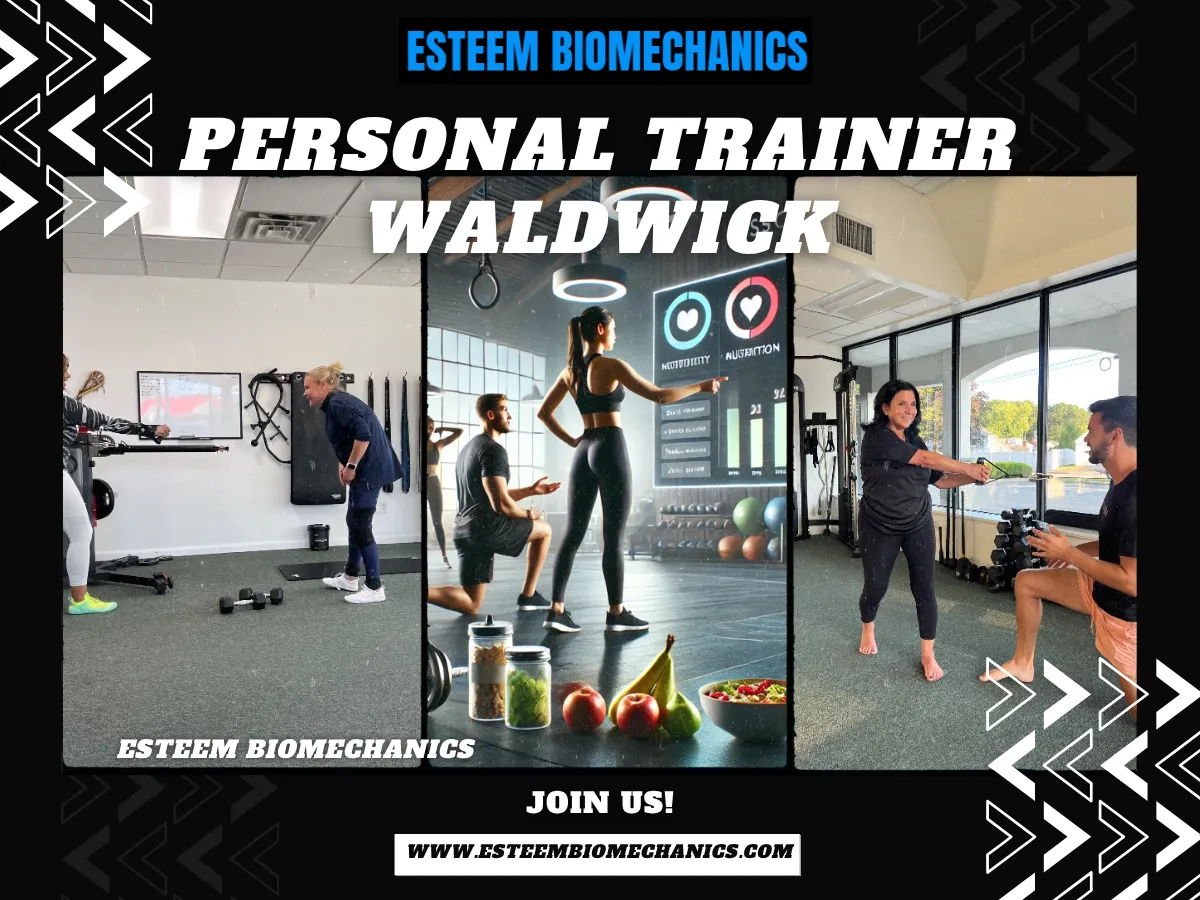
What to Expect in a Biomechanics Assessment
What to Expect in a Biomechanics Assessment
Quick answer — Will a biomechanics assessment help me?
Yes. A biomechanics assessment identifies movement patterns, joint limitations, and strength imbalances that cause pain or limit performance and produces a targeted plan—often showing measurable improvement in weeks when followed consistently.
What a biomechanics assessment looks like — step-by-step
A biomechanics assessment is a structured evaluation that moves from history to objective measurement to a prioritized plan. At Esteem Biomechanics in Waldwick, NJ, sessions are one-on-one and typically follow five clear steps so clinicians can prescribe corrective, sustainable training.
Step 1 — Intake & medical history
You’ll complete intake forms covering current symptoms, injury history, surgeries, medications, activity level, and goals.
The clinician screens for red flags (recent fractures, uncontrolled blood pressure, neurological deficits) to determine safe testing boundaries.
Expect targeted questions about pain quality, onset, and activities that aggravate or relieve symptoms.
Step 2 — Static posture & alignment screens
The clinician observes standing and seated posture: pelvic tilt, spinal curves, shoulder heights, and head position.
These static markers reveal habitual patterns (e.g., anterior pelvic tilt, forward head posture) that affect movement efficiency.
Findings guide which dynamic tests to prioritize and which compensations to address first.
Step 3 — Functional movement & gait analysis
Common tests: bodyweight squat, forward lunge, single-leg balance, overhead reach, and a short walk/gait trial.
Clinicians evaluate joint sequencing, symmetry, timing, and compensations (e.g., hip drop on single-leg stance, knee valgus during squat).
Data captured: movement quality scores, observable asymmetries, and notes on pain during specific phases.
Typical time: gait and movement observation ~10–20 minutes; tests are repeated after brief coaching to assess responsiveness.
Step 4 — Range of motion, strength, and special tests
Objective measures include joint ROM (e.g., hip flexion degrees), manual muscle tests or resisted strength grading, and orthopedic special tests (e.g., impingement signs).
Numeric examples: hip flexion limited to 90° vs. normative ~120°, single-leg calf raise endurance 8 reps vs. target 20+ reps.
These measures provide baselines to set measurable goals and track progress.
Step 5 — Optional tools: video analysis, force plates, gait lab
When needed, clinicians use high-speed video for frame-by-frame gait, force plates for ground-reaction analysis, or wearable sensors for cadence and symmetry.
These tools quantify load distribution, step length, and force timing—helpful for complex cases or athletes seeking performance gains.
At Esteem Biomechanics we integrate video feedback and gait analysis selectively to translate findings into precise exercise cues.
What to bring and how to prepare for your appointment
Photo ID and any referral paperwork.
Comfortable, form-fitting clothing or workout shorts and a tank/top so posture and movement are visible.
Low-profile athletic shoes (sneakers) and a pair of thin socks for barefoot tests when requested.
Recent imaging (X-ray, MRI) or reports — bring digital files or printed copies.
List of current medications, supplements, and allergies.
A short list of your goals and activities you want to return to (walking, golf, gardening).
Arrive hydrated and avoid heavy meals immediately before the session.
Plan for 45–75 minutes for the initial assessment so there’s time for testing and planning.
Typical results, recommendations, and timeline after the assessment
After the assessment you’ll receive a clear summary: prioritized dysfunctions, numeric baselines, short-term objectives, and a tailored plan. Recommendations aim to reduce pain, restore efficient movement, and build sustainable strength.
Possible recommendations
Home corrective exercise program with 6–10-minute daily drills for motor patterning.
In-clinic 1:1 training program focusing on gait retraining and joint loading progression (8–12 weeks).
Referral to podiatry or orthotics for foot-driven issues, or to PT/MD for acute medical management.
Manual therapy or soft-tissue work integrated with exercise to improve mobility.
Nutritional guidance and accountability check-ins to support recovery and body composition goals.
Gait retraining sessions using video feedback and progressive load-bearing drills offered through Esteem Biomechanics programs.
Typical timeline and measurable goals
Re-assess in 2–4 weeks to check adherence and early changes (e.g., reduce pain from 6/10 to 3–4/10 or add 5–10° ROM).
6–8 weeks: expect improved movement quality, better single-leg balance (target +30–100% reps), and increased strength on key lifts.
12 weeks: sustainable strength gains and functional improvement for daily activities or recreational sports.
Measurable examples: increase single-leg squat depth by 25–50%, improve gait symmetry to <5% side-to-side variance, or achieve 15–30% strength gains on targeted movements.
Frequently asked questions (FAQ) — quick answers
Q: How long does a biomechanics assessment take?
A: 30–75 minutes (typical range for initial assessments).
Q: Will testing be painful?
A: Tests are designed to be safe; clinicians avoid provocation of acute red-flag conditions. Some tests may reproduce familiar pain to identify causes, but clinicians modify or stop tests as needed.
Q: How soon will I feel better?
A: Many clients notice small improvements in movement or pain within 1–4 weeks with consistent practice; larger functional changes typically occur over 6–12 weeks.
Q: Can this help chronic conditions like knee osteoarthritis or low back pain?
A: Yes—biomechanics-driven programs reduce load through movement re-patterning and strengthening, which often improves pain and function even in chronic cases.
Q: Will I get a written plan after my biomechanics assessment?
A: Yes—most clinics provide a written or digital plan with exercises, progression notes, and a recommended follow-up schedule.
Q: Is a biomechanics assessment safe for older adults or those with chronic disease?
A: Yes—assessments are individualized. Clinicians adapt tests and progressions to medical status while focusing on function and safety.


