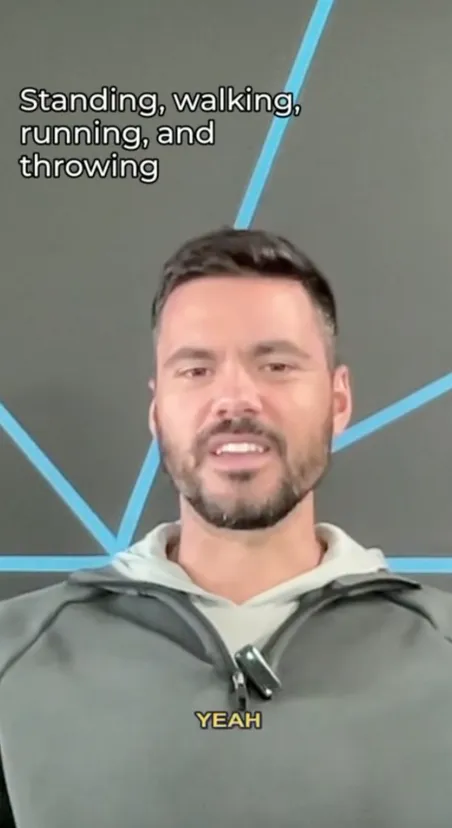
Rethinking Human Movement: Neil Bortolus on Biomechanics, Functional Patterns and Health
Neil Bortolus Joins Stewart Alsop on the Crazy Wisdom Podcast to Discuss Movement, Biomechanics and the Future of Human Health
Neil Bortolus, founder of Esteem Biomechanics in Waldwick, NJ, recently joined Stewart Alsop III on the Crazy Wisdom Podcast for a wide-ranging conversation about human movement, biomechanics, physical health, technology, artificial intelligence, and the future of how people live and move.
The episode, “The Horizontal Truth: Why Everything You Know About Movement is Wrong,” goes well beyond a traditional conversation about exercise. Neil and Stewart explore how humans are designed to move, why individualized training matters, and how our increasingly technology-driven environment may be changing the way we interact with our bodies.
Looking at Movement Differently
Neil's approach to training is centered around understanding how a person moves as a whole, rather than simply isolating individual muscles or following a standardized workout routine.
Through his work with Functional Patterns, Neil focuses on fundamental human movement patterns such as walking, running, standing, and throwing. The goal is to understand how the body works together and identify movement limitations or imbalances that may affect strength, mobility, stability, and overall physical performance.
During the conversation, Neil explains why he believes training should be adapted to the individual.
Every person brings a different history, physical structure, movement pattern, and set of goals to training. That means the same workout isn't necessarily appropriate for everyone.
At Esteem Biomechanics, this philosophy is reflected in the way clients are evaluated and trained. Rather than simply prescribing exercises, Neil looks at how each person moves and what their body needs.
From Athletes to People Facing Movement Challenges
One of the more interesting aspects of Neil's experience is the wide range of people he has worked with.
His training experience includes working with high-school athletes as well as individuals dealing with significant physical and neurological challenges, including people with cerebral palsy and stroke recovery.
Those situations can require very different approaches, but they also reinforce an important principle: movement training needs to be individualized.
The objective isn't necessarily to make every person perform the same movements. It's to understand where someone is starting and develop an appropriate path toward better movement and physical function.
That perspective is particularly important for adults who may have spent years dealing with pain, limited mobility, previous injuries, or movement compensations.
The Connection Between Movement and Pain
The conversation also explores the relationship between movement, connective tissue, and chronic pain.
Rather than looking at pain as an isolated problem, Neil discusses the importance of considering how the body is functioning as an interconnected system.
This can change the way people think about training.
Instead of simply asking, “What exercise should I do for my back?”, a broader approach asks questions such as:
How does the person walk?
How do they stand?
How do they stabilize their body?
How do different parts of the body work together?
Are there movement patterns that may be contributing to unnecessary stress?
How can strength and mobility be developed while improving overall movement?
This is one of the fundamental ideas behind biomechanics-based training.
Beyond Exercise: The Human Body in a Technology-Driven World
The discussion eventually expands well beyond the gym.
Neil and Stewart explore the relationship between human biology and technology, including artificial intelligence, automation, and the environments people increasingly live and work in.
Technology can make life easier and provide incredible tools for learning, communication, and problem-solving. At the same time, the conversation raises a broader question:
Are the environments we are creating helping humans function better—or are they moving us further away from the physical behaviors our bodies evolved to perform?
That question connects directly back to movement.
Humans evolved to walk, run, carry, climb, throw, interact with their environment, and constantly adapt to physical demands. Modern life has removed many of those demands while replacing them with prolonged sitting, screens, vehicles, and increasingly automated environments.
The result is a fascinating discussion about what happens when technological progress and human biology move in different directions.
First-Principles Thinking
One of the recurring themes throughout the conversation is first-principles thinking.
Rather than accepting something simply because it has become standard practice, first-principles thinking asks what is actually happening underneath the surface.
That concept applies to movement just as much as it applies to technology.
Instead of asking:
“What exercise is everyone doing?”
the question becomes:
“Why are we doing this movement in the first place?”
And instead of assuming that a particular training method is appropriate for everyone, the focus becomes understanding the individual, their movement patterns, their goals, and their physical needs.
This way of thinking is a major part of Neil's approach to biomechanics and personal training.
A Conversation About the Future of Human Health
The conversation between Neil and Stewart ultimately becomes a much larger discussion about the future.
They explore artificial intelligence, human cognition, education, technology, and different visions of what society could look like as technology becomes increasingly integrated into everyday life.
One of the ideas that connects these topics is the importance of creating environments that support human physical and mental function rather than simply making life more convenient.
For Neil, that conversation comes back to something fundamental: the human body.
Understanding how people move, how they interact with their environment, and how movement affects overall physical function may become increasingly important as modern life becomes more sedentary and technology-driven.
Listen to Neil Bortolus on Crazy Wisdom
Neil's conversation with Stewart Alsop provides an opportunity to hear the philosophy behind his approach to biomechanics directly from him.
The discussion covers far more than personal training. It examines movement, pain, human biology, technology, artificial intelligence, and the future of human health.
For anyone interested in understanding the ideas behind Esteem Biomechanics and why Neil approaches personal training differently, the episode offers a deeper look at the philosophy that guides his work.
Listen to Neil Bortolus on the Crazy Wisdom Podcast and learn more about Esteem Biomechanics in Waldwick, New Jersey.
At Esteem Biomechanics, the focus isn't simply on completing a workout. It's on understanding how you move, why you move the way you do, and how individualized training can help you build better movement for everyday life.
Frequently Asked Questions About Biomechanics and Functional Patterns
What is biomechanics personal training?
Biomechanics personal training focuses on how the body moves as a connected system. Instead of simply prescribing a standard workout, training considers an individual's movement patterns, mobility, strength, stability, physical history, and goals to develop a more individualized approach.
What is Functional Patterns training?
Functional Patterns is a movement-based training approach that emphasizes fundamental human movement patterns, including walking, running, standing, and throwing. Neil Bortolus incorporates Functional Patterns principles into his approach at Esteem Biomechanics.
Where is Esteem Biomechanics located?
Esteem Biomechanics is located at 171 Franklin Turnpike in Waldwick, New Jersey. The studio is conveniently located for clients from Waldwick, Ramsey, Allendale, Ho-Ho-Kus, Saddle River, Ridgewood, Wyckoff, Midland Park, and surrounding Northern New Jersey communities.
Is Esteem Biomechanics a Functional Patterns personal trainer near Ramsey?
Yes. Esteem Biomechanics is located in Waldwick, just outside Ramsey, and provides individualized movement-based personal training for clients from Ramsey and surrounding communities.
Who can benefit from biomechanics personal training?
Biomechanics-based training can be appropriate for a variety of people, depending on their individual circumstances and goals. Neil has experience working with athletes as well as adults dealing with movement limitations, previous injuries, mobility concerns, and other physical challenges.
Is biomechanics training only for athletes?
No. Although biomechanics can be useful for athletic performance, the principles of understanding and improving movement can also apply to everyday activities such as walking, standing, lifting, balancing, and moving comfortably through daily life.
How is individualized personal training different from a typical gym workout?
A typical gym program may follow a predetermined series of exercises. Individualized personal training starts by considering the specific person, including how they move, their physical history, current abilities, and goals. Training can then be adjusted based on those factors.
Does Neil Bortolus work with people dealing with pain or previous injuries?
Neil has experience working with individuals who have dealt with pain, previous injuries, and significant movement challenges. Training is individualized based on the person's circumstances and goals. People with medical conditions or injuries should consult the appropriate healthcare professional regarding diagnosis and treatment.
What does Neil Bortolus discuss on the Crazy Wisdom Podcast?
Neil's conversation with Stewart Alsop covers human movement, biomechanics, Functional Patterns, pain, human biology, technology, artificial intelligence, and the relationship between modern environments and human physical function.
Where can I learn more about Neil Bortolus and Esteem Biomechanics?
You can learn more about Neil Bortolus, his approach to biomechanics and Functional Patterns training, and personal training at Esteem Biomechanics in Waldwick, NJ by visiting the Esteem Biomechanics website or contacting the studio directly.
Ready to Understand Your Movement?
Your training should be built around you—not a generic workout plan.
If you're looking for biomechanics personal training in Waldwick, NJ, or a Functional Patterns personal trainer near Ramsey, schedule an evaluation with Neil Bortolus at Esteem Biomechanics. Learn more about how you move, identify areas that may need attention, and develop a personalized approach to strength, mobility, and physical function.
Contact Esteem Biomechanics today to schedule your evaluation.


